
14.8 C
Johannesburg
- Advertisement -

Reserve Bank holds interest rates despite benign conditions

- Advertisement -

Must read

By Thebe Mabanga

The Reserve Bank’s Monetary Policy Committee (MPC) kept interest rates on hold at its first meeting of the year, despite benign conditions for the inflation outlook.

Two members of the committee opted for a cut, while the remaining four voted to hold.

The decision comes against a backdrop in which average inflation for 2025 was the lowest in 25 years at 3.2%.

The price of gold reached a new record of $5 500, having doubled over the past year.

Oil prices rose to $70 but remain historically low, despite United States President Donald Trump’s threat to attack Iran.

Meanwhile, the rand traded at R15.88 to the dollar, making it the second-best-performing emerging market currency this year.

All of these factors are expected to shield the South African economy from imported inflation and keep inflation on track to meet the Reserve Bank’s new target of 3% over the next three years. Yet the Bank opted to hold.

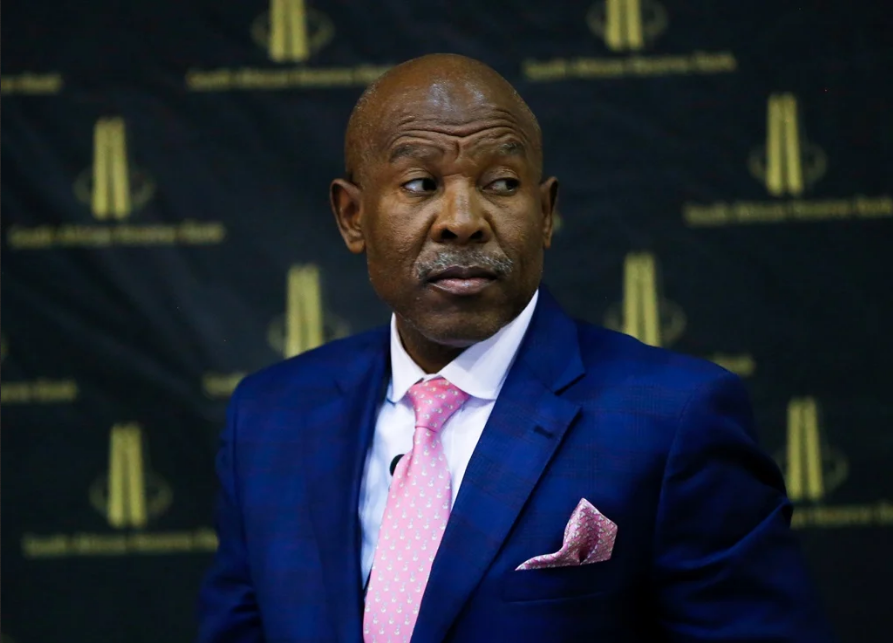
Reserve Bank Governor Lesetja Kganyago opened the MPC statement on an alarmist note, stating: “Last year was marked by extreme global uncertainty, and 2026 has begun with a new round of shocks. Geopolitical tensions remain elevated, reflecting what appears to be a rupture in the global political order. There are also new threats to central bank independence.”

Beyond renewed threats involving Iran, Kganyago was also referring to dramatic events in Venezuela during the first Sunday of the year, when President Nicolás Maduro was captured in a military operation.

He was further alluding to Trump’s threats to annex Greenland, levy punitive tariffs on European countries and Canada for strengthening ties with China, and prosecute Federal Reserve Chair Jerome Powell over the cost of refurbishing the Federal Reserve building.

Critics view these moves as intimidation tactics.

Kganyago is a signatory to a letter by central bankers from around the world pledging support for Powell.

The Reserve Bank appears to believe that heightened global risks outweigh favourable local conditions.

Kganyago pointed to what he described as “unsustainable” global trends, including elevated debt levels, persistent imbalances, and trade negotiations increasingly taking place outside the World Trade Organisation.

Countries are now negotiating individual trade deals, most notably with the United States, following President Donald Trump’s disruption of the global trading system.

Locally, the Reserve Bank modelled two inflation scenarios.

The first assumes the rand remains strong and oil prices stay low over the short to medium term.

Under this scenario, inflation would remain subdued and reach the 3% target well before the currently anticipated period of 2028.

The second scenario assumes a weaker rand and higher oil prices, which would see inflation breach 4% by next year before easing back into the new 3% target.

The Bank noted: “These scenarios show that even quite large shocks, like those modelled, would not push inflation outside our tolerance range of 3%, plus or minus one.” This makes the decision to hold puzzling.

The Bank views inflation risks as “balanced”, with the biggest domestic risk stemming from electricity prices, which have risen well above the inflation rate for more than a decade.

Kganyago concluded by noting that “2025 was a watershed year for the South African economy”.

Despite a volatile global backdrop, he said there had been significant progress on domestic reforms, including the adoption of a new inflation target.

“These efforts have been rewarded with lower borrowing costs, a rapid decline in inflation expectations, and steadier growth,” he said.

Kganyago added that the Bank’s role in sustaining this positive outlook is to ensure inflation remains contained in the years ahead.

He once again defended the new inflation target, widely viewed as a victory for the Reserve Bank.

He argued that the previous target was “too high and too wide”, leading economists and academics to speculate about an “implicit target” when anticipating interest-rate moves.

He noted that the new target—with a narrower band of between 2% and 4%—has already anchored expectations at 3%.

INSIDE POLITICS

More articles

LEAVE A REPLY

Please enter your comment!
Please enter your name here

AVBOB STEP 12

Inside Education Quarterly Print Edition

Inside Metros G20 COJ Edition

JOZI MY JOZI

QCTO

Latest article



