

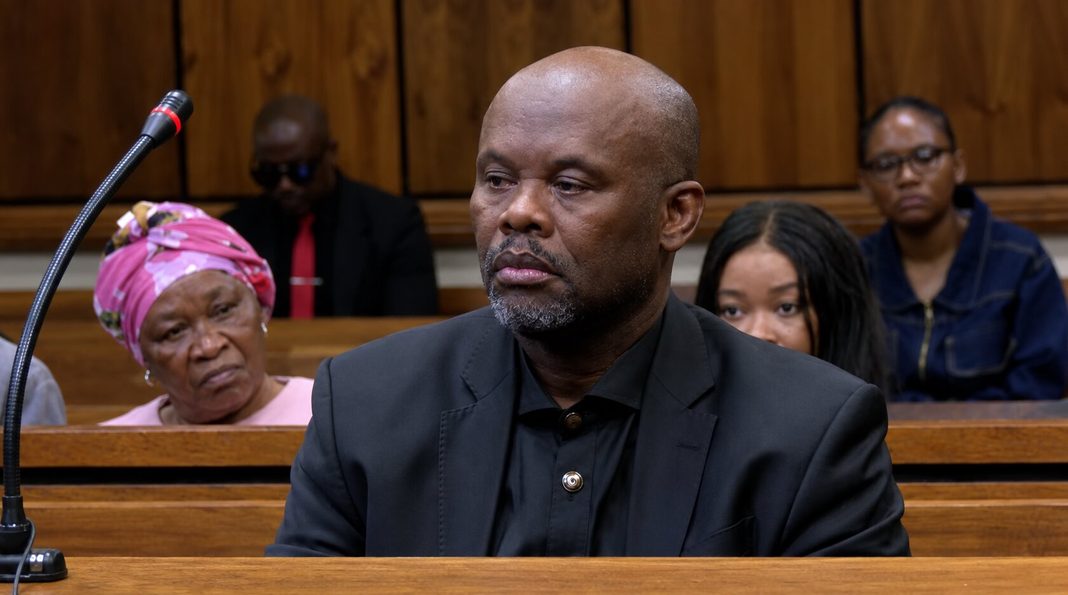


By Johnathan Paoli
Magistrate Hleziphi Mkhasibe said on Tuesday that releasing former deputy National Police Commissioner Shadrack Sibiya on bail would create a risk of witness intimidation and evidence tampering.
“The court has carefully balanced the applicant’s constitutional right, his personal circumstances, the presumption of innocence and the interest of justice. The finding of the court is that the applicant failed to show exceptional circumstances that permits the applicant’s release on bail. As a result, bail is refused,” Mkhasibe said, delivering her decision at the Randburg Magistrate’s Court.
Sibiya — who was arrested in September — faces five charges including grooming, human trafficking and rape relating to two victims, a 16-year-old girl and an 18-year-old woman.
He resigned from the South African Police Service on 12 October, shortly after disciplinary proceedings against him began. Police classified his departure as a dishonourable discharge.
He will remain in custody after the court found that the state had presented a strong case against him at this stage of proceedings, although Mkhasibe said that questions of guilt, witness credibility and the admissibility of evidence would ultimately be decided by the trial court.
The magistrate said there was a likelihood that Sibiya would interfere with witnesses or destroy evidence if released, particularly given the allegations involving the teenage complainant and his alleged threats against her father, identified in court as Mr M.
The state alleges that Sibiya began communicating secretly with the girl in July 2026, with their exchanges allegedly becoming explicitly sexual.
According to the prosecution, he allegedly requested sexually explicit material and asked the girl to record videos of herself masturbating.
Mkhasibe said the girl had allegedly been instructed to keep their communication secret and delete their exchanges.
“The applicant’s actions give us a window into his intention. As a high-ranking police officer at the time, he was aware that he was committing a crime. He was also aware that he is tampering with evidence that has the potential of implicating him,” she said.
The magistrate found that the alleged destruction of evidence on Sibiya’s cellphone strengthened the state’s argument that he could interfere with evidence if granted bail.
She said the court had been told that the cellphone used in the alleged commission of the offences had been wiped clean just before Sibiya’s arrest.
Mkhasibe also found that the allegations of threats against Mr M were significant in assessing whether witnesses would be safe if Sibiya were released.
The court heard that Mr M had allegedly been threatened after confronting Sibiya about his daughter’s allegations.
Mkhasibe said a subsequent recorded conversation between the two men lent credibility to the father’s account.
“The second utterances of threats of harm in the presence of the police gives credence to the first claim of threat of harm by Mr M. The second threat establishes a dangerous pattern of behaviour. It shows intent, meaning the person was not just having a momentary lapse in judgement the first time,” she said.
The magistrate added that Sibiya knew Mr M was a state witness when he contacted him.
“He could have opted not to call Mr M, but he allowed his anger and ego to cloud his judgement. He never thought that Mr M would recall the conversation. Hence, he threatened him. In threatening Mr M, he threatened a witness knowing very well that he was a witness,” Mkhasibe said.
While finding that Sibiya and Mr M shared a close relationship, the magistrate rejected the suggestion that Mr M had falsely implicated the accused.
She said the father had reported his daughter’s allegations, which were supported by messages between her and Sibiya.
Mkhasibe nevertheless said it was “bizarre” that a father would send explicit images of his daughter to Sibiya, as the accused had claimed.
She said the issue would have to be explored at trial.
The court also declined to make final findings on the trafficking and rape charges, leaving the trial court to determine whether the legal elements of the offences had been established.
Sibiya’s defence had argued that the charges were fabricated and that he was not a flight risk, pointing to his family ties, health, pension benefits and willingness to cooperate with authorities.
However, Mkhasibe found that his financial circumstances would not be unduly prejudiced by detention, noting that family members were managing his business and that he could access pension benefits.
She also said he would receive necessary medical treatment in custody despite the absence of medical records in the bail proceedings.
The prosecution told the court that investigations were in their final stages, with only a few outstanding matters remaining.
The case was postponed to 24 November.
INSIDE POLITICS






