



Staff Reporter
Deputy Electricity and Energy Minister Alexandra Abrahams has questioned Eskom management over controversial diesel payments at its Ankerlig Power Station, following an investigation that identified governance failures involving about R3 billion in payments.
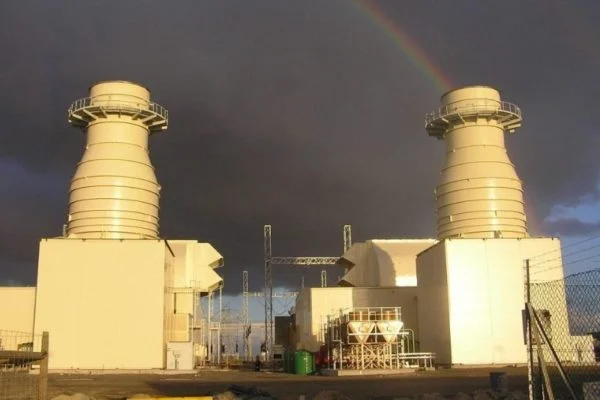
Abrahams raised the matter during an oversight visit to the 1,327 MW power station in Atlantis, Western Cape, last week, the Department of Electricity and Energy said on Monday.
Her intervention follows Eskom’s disclosure on 27 August that an independent investigation found about R3 billion in payments to three diesel suppliers were made outside contractual terms during the electricity supply crisis in early 2025. The investigation also found emergency approvals that did not comply with Eskom’s delegation of authority.
However, independent verification found no evidence that diesel paid for by Eskom was missing. Eskom said fuel had either been delivered and consumed, remained in storage or was available for scheduled delivery.
Abrahams questioned management about media reports alleging that the diesel paid for had not been received.
The department said Eskom management told the deputy minister that its stock-control system, suppliers’ records and an independent audit showed there was currently no diesel that had been paid for but remained outstanding.
Eskom launched its investigation in March 2025 after concerns emerged over the performance of diesel procurement and storage contracts during operational emergencies earlier that year.
The utility said last month that the payments outside contractual terms primarily involved governance and approval failures rather than missing diesel or identified financial losses.
Some matters arising from the investigation have been referred to the Hawks, while Eskom is pursuing corrective and consequence-management processes.
Eskom said the pressure on diesel supplies came as extensive generation breakdowns, delayed returns from maintenance and constrained pumped-storage reserves increased reliance on its open-cycle gas turbines between January and March 2025.
At Ankerlig, available diesel-powered generating hours fell from about 303 to around 52 hours within four days before stocks were replenished. The plant currently operates nine open-cycle gas turbine units with a nominal generation capacity of 1,327 MW.
“Peaking power stations like Ankerlig perform a vital function in our broader energy ecosystem. Beyond simple generation, their rapid agility provides the essential grid stability and emergency reserve required to balance supply during demand spikes and keep the lights on for South Africa,” Abrahams said.
Each 148 MW unit consumes about 45,000 litres of diesel an hour when operating. About 17 million litres are stored at the station, with another 50 million litres kept at off-site depots and transported to Ankerlig as needed.
The plant can require roughly 100 truck deliveries a day when operating at maximum utilisation.
Ankerlig’s Energy Availability Factor increased from 87.16% in 2025 to 93.21% in 2026.
The plant is scheduled to transition from diesel to natural gas by 2030. It has already been equipped with dual-fuel technology, but additional infrastructure still has to be installed and contracts with potential gas suppliers negotiated.
The department estimates that switching from diesel to gas could reduce fuel costs at Ankerlig by up to 40%.
“Replacing high-cost diesel with gas will significantly reduce operational fuel expenditure while lowering carbon emissions, ensuring a more affordable, sustainable, and reliable electricity supply,” Abrahams said.
“We are committed to ensuring that South Africa’s energy transition balances environmental responsibilities with grid stability and cost-effective supply, so that we can deliver cheaper electricity to households and businesses.”
INSIDE POLITICS






