



By Jonathan Erasmus
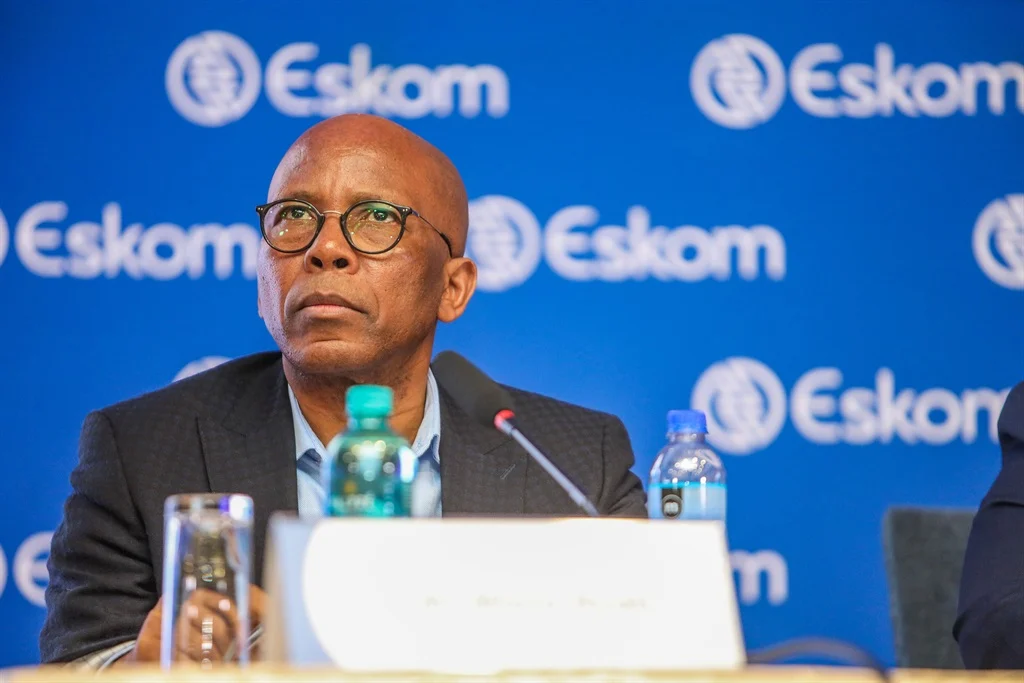
The chaos engulfing the City of Johannesburg’s senior management and the boards of its multiple entities is similar to the crisis chairperson Mteto Nyati found when he arrived at the state-owned power utility, he has said.
“I [can] not help but see some of the parallels between what we picked up in Eskom about four years ago with what is happening today in Johannesburg. We had gone through 12 CEOs in 15 years in Eskom, we had seven chairmen over that 15-year period and none of them had been able to complete their term. And the thing that we found in Eskom at the time was a significant number of people that were in acting roles,” Nyati said.
He made the comments while moderating an online discussion hosted by the Centre for Development and Enterprise (CDE) this week, during which the civil society organisation publicly released its report, titled Kickstarting Delivery – Joburg’s Mission Critical Jobs, the third report in its Johannesburg Matters series.
The report states that without an independent, merit-based and stable administration guided by strong boards across the city’s entities and enabling legislative reforms, South Africa’s largest metropolitan municipality, and by default other struggling municipalities, will continue to collapse.
The document’s key recommendations include a public commitment by “every political party” to protect the “professional independence” of the city’s administration and the managers of its municipal entities.
It also calls on all political hopefuls to “publicly declare their support for transparent and competitive appointments, with candidates independently assessed against clear standards of competence, experience and integrity”.
Nyati said Eskom’s leadership had to “put a lot of focus on making sure that we appoint the right people in the right roles”.
He was appointed Eskom chairperson in November 2023, when the utility was unable to generate sufficient electricity to meet the country’s needs and rolling six-hour blackouts had become normalised.
Under the board’s leadership, and with high-level intervention and support from President Cyril Ramaphosa’s office, Eskom’s ability to generate electricity has improved significantly. The country reached a full consecutive year without load shedding on 16 May 2026.
“We had to first identify what those roles were … [and] … we ended up changing about 45% of those leaders in order for us to be able to execute the turnaround that we did in Eskom. We also put a lot of focus on the boards that exist within the different divisions of Eskom and made sure that we appointed capable leaders within those boards,” Nyati said.
Having read the CDE’s latest report, he said: “I just could connect to it because something that I’ve walked through it just the last three years.”
The report said any incoming political administration would need not only to prioritise the appointment of turnaround specialists to key leadership roles, but also to allow those appointees to hire experienced staff and use “every possible available mechanism to get unsuitable people out of vitally important positions”.
Political instability
It said a key factor underpinning the city’s governance crisis was “the extraordinary political instability the city has experienced for more than a decade”.
“Since 2016, when the city last saw a single party have a majority in council, the city has had nine mayors and eight coalition administrations. Each has brought their own priorities for the city, disrupting long-term planning. No mayor has completed a full five-year term,” stated the report.
It went on to say that, amid this instability, political allegiance had frequently taken precedence over whether candidates had the skills and experience required for the jobs to which they were appointed.
“None of the members of the Johannesburg Water board, for example, is a professionally qualified engineer, even as the utility faces an infrastructure renewal backlog of more than R26.6 billion,” said the report.
CDE executive director Ann Bernstein said there was no denying that Johannesburg faced a “massive service delivery crisis” and that the city government had “in many respects, collapsed”.
“We have to identify and then fill with the best possible people the mission critical jobs for reform in Johannesburg [and we must] prepare for vested interests to fight back,” Bernstein said.
Bernstein said the scale of the crisis was evident in the numbers. Referring to an August report released by the CDE, titled Joburg in Jeopardy, she said residents reported more than 23,000 potholes and 54,000 power outages during the last six months of 2025, while 55% of all traffic lights were faulty.
Between June 2025 and June 2026, she said, 50,000 water leaks or burst pipes were reported to the city, with repairs often taking months to complete, if they were completed at all.
“Political allegiance has frequently taken precedence over whether candidates have the skills, the experience, the integrity required for the jobs to which they are appointed.
“At the same time, Johannesburg’s entities and administrations have essentially become fiefdoms for different political factions in the city. And what has happened is that senior appointments and board positions have essentially become coalition bargaining chips,” Bernstein said.
Legal architecture
Bernstein said the report pointed to a long-term goal of clearly separating the legislative and executive functions of a municipality.
The report states that the legal architecture governing local government, including the Constitution, the Municipal Systems Act and the Municipal Structures Act, “fails to delineate clearly the roles of mayor, council and executives in cities’ administration”.
However, it says the Johannesburg administration should “act as if this separation already exists and initiate a determined and realistic process to appoint and support competent people in the city’s most critical jobs”.
Without naming him directly, Bernstein suggested that incumbent city manager Floyd Brink might not be the person to lead a reformed administration. If the newly elected government agreed, she said, the “city has to find the resources to end the contract early”.
“Joburg needs a city manager absolutely committed to a reformed, effective administration that is winning the war on corruption, and is able to kickstart delivery,” she said.
Bernstein also said most of the boards governing the city’s entities needed to be overhauled. Many board members were political appointees who lacked the technical and financial qualifications needed to manage complex institutions such as Johannesburg Water and City Power. City Power has had six board chairpersons since 2017.
“The city will need a new culture of accountability, clear roles and responsibilities, data-driven reporting, consequences for missed targets or performance failures or wrongdoing, and we’re suggesting reactivating and strengthening disciplinary processes,” she said.
The document said the city currently employed about 35,000 people but had a serious shortage of technical and professional skills. Its annual reports pointed to “persistent vacancies among engineers, finance professionals, ICT specialists, project managers and supply-chain experts”.
It also noted that at least seven of the city’s 24 senior management positions, or 29%, were occupied on an acting basis, with one senior manager carrying responsibility for two senior portfolios simultaneously.
INSIDE POLITICS






