
- Advertisement -spot_img

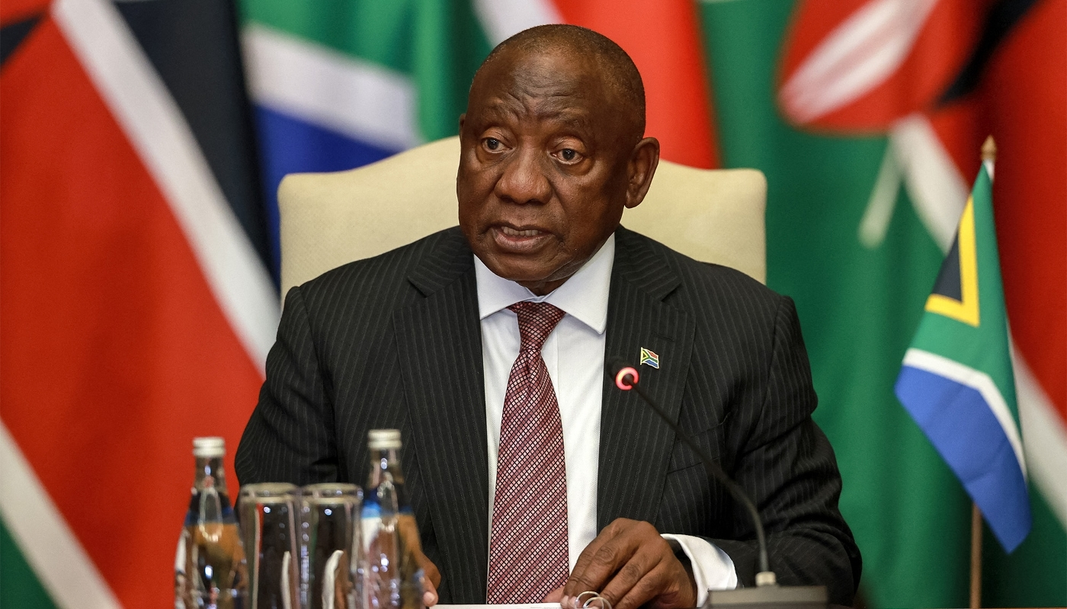
Ramaphosa: No place for criminals, corruption or political interference in SAPS

- Advertisement -spot_img

Must read

By Cyril Ramaphosa

On Sunday, we held the South African Police Service National Commemoration Day, as we do every year, where we honour the police officers who were killed in the line of duty in the past year.
 
Over the twelve months to March this year, twelve police officers lost their lives in the line of duty. Although this is half as many deaths as the year before, even one death of a SAPS member is one too many. 
 
Each of these officers was a colleague, a friend and a member of a family. Their deaths remind us of the risks that thousands of police officers take every day so that the rest of us may be safer.
 
We honour the bravery of these officers who put their lives on the line in the service of their country.
 
As we consider the challenges facing our police today, it is worth remembering just how far we have come.
 
For most people, the South African Police Service (SAPS) is the first they turn to when their safety is threatened, when there is an emergency or when they need to report a crime. When our people call the police, often at a moment of great distress or danger, they expect that someone will answer. They expect that help will come.

They expect that the law will protect them. This is an expectation that every South African has, regardless of where they live.
 
The Constitution makes the SAPS responsible for law enforcement. Although the private security industry provides some complementary services, the responsibility for keeping the public safe ultimately rests with the state. Private security may protect those who can afford it, but public safety must be available to all.
 
The SAPS remains at the fore of the work to keep our country safe. Beyond visible policing on our streets and in our communities, the SAPS conducts operations critical to our economy. This includes combating illegal mining through Operation Vala Umgodi and operations to dismantle syndicates involved in cable theft and infrastructure vandalism, smuggling and counterfeiting, human trafficking and other priority crimes.  
 
Much of this work happens away from public view. Every day, police officers investigate crimes, track down suspects, gather evidence, patrol our communities and confront dangerous criminals.
 
Our men and women in uniform do so at a great cost to their personal safety. 
 
We often take for granted just how far we have come when it comes to the transformation of law enforcement in this country. The old South African Police was about control and brute force. It was dedicated to maintaining the apartheid order while suppressing any resistance or protest. 
 
For millions of South Africans, the police were not people to whom they could turn for protection. They were instruments of an oppressive state.
 
Following the democratic breakthrough, we began the hard task of building a new police service that was aligned with constitutional values and human rights, and that was accountable to the people it is mandated to serve. This required much more than changing the name of the police force. It required changing the very purpose of policing.
 
We had to build a police service that no longer existed to protect the state from the people, but to protect the people and uphold their rights.
Today, the work of the SAPS is subject to the oversight of a parliamentary portfolio committee, and the Independent Police Investigative Directorate was established to look into allegations of police misconduct. 
 
This accountability is an essential feature of democratic policing. Those who are entrusted with enforcing the law must themselves be subject to the law.
 
The re-orientation of the SAPS to service and accountability has been thrown into sharp relief as a number of apartheid-era crimes are under scrutiny, including Steve Biko’s death in police custody in 1977 and the case of the Cradock Four, who were murdered in 1985.  
 
Despite being offered amnesty by the Truth and Reconciliation Commission in return for full disclosure, a number of apartheid-era police chose dishonesty and misrepresentation of the facts surrounding the deaths of the people they killed.  
 
These memories are uncomfortable. Yet they remind us why it is so important to have a police service rooted in respect for human rights, that serves and protects instead of terrorising people. 
 
They also remind us of the danger that arises when those entrusted with the power of the state believe that they are above the law. That is a lesson from our past that has particular relevance today.
 
It is a reminder of why the ongoing judicial commission of inquiry into criminality and political interference in the criminal justice system, headed by Judge Mbuyiseli Madlanga, matters so much.
 
The allegations that have been made about criminal infiltration, corruption and political interference in parts of our criminal justice system are deeply disturbing.

South Africans are entitled to know the truth. They are entitled to know that those entrusted with fighting crime are not themselves working with criminals.

The Commission must therefore be allowed to do its work thoroughly and without fear, favour or interference. Where wrongdoing is established, there must be consequences. Where crimes have been committed, the law must take its course.
 
The alleged infiltration of the SAPS by criminals and vested interests, supported by corrupt members, must not be allowed to define the SAPS. Nor should the actions of a corrupt few be allowed to define the many thousands of police officers who serve our country with honesty and courage.
 
The SAPS has more than 180,000 members, alongside more than 3,000 police reservists. Every day these men and women go about their duties serving their communities. 
 
They respond to calls for help. They attend scenes of terrible violence. They search for missing children. They investigate murders and robberies. They confront gangs and organised crime. And they often do this under difficult and dangerous circumstances.
 
For every incompetent or corrupt SAPS member, there are many thousands more who are not. Most SAPS members serve with honour and embody the values of the badge they wear.
 
We should never allow the wrongdoing of some to diminish the service of the many. At the same time, we owe it to every honest police officer to root out those who dishonour the badge.
 
Even so, there is a challenge of confidence in the police. According to the 2025/2026 Governance, Public Safety and Justice Survey published by Statistics South Africa, victims often do not report certain crimes, citing the belief that “the police would not do anything about it”.
 
We cannot dismiss this sentiment as simply a perception. We must take it seriously.

Trust is one of the most important weapons we have in the fight against crime.

The police need communities to report crimes, identify suspects, provide information and come forward as witnesses.

Communities, in turn, need to know that when they report a crime, they will be treated with respect and that their case will receive the attention it deserves.
 
An unreported crime cannot be investigated, and without investigation a perpetrator cannot face justice.
 
But we must also recognise that confidence cannot be demanded. It has to be earned. It is earned when a telephone call is answered, when a police vehicle arrives, when a case is properly investigated and when a victim is treated with dignity.

Above all, it is earned when criminals are arrested, prosecuted and brought to justice.
 
Our law enforcement apparatus faces a number of challenges. Apart from the revelations emerging from the Madlanga Commission, the SAPS is also under-resourced in some areas and lacks some of the skills needed to combat new forms of crime. 
 
As government, we are determined to strengthen the SAPS. We are increasing the capacity of the service through the SAPS’ Project 11,000. The next intake of 5,500 constables will soon be entering training academies.
 
But strengthening the police is not only about increasing numbers.

It is about ensuring that we recruit the right people, give them the right training, equip them properly and place them where they are most needed.
 
We will continue to professionalise the SAPS so that policing becomes a career of choice for our country’s brightest. Of those who have applied for the most recent intake, a number hold qualifications in policing, law, forensic investigation and other subjects. 
 
But as the testimony at the Madlanga Commission bears witness, it is not enough that police members have technical training and expertise. Policing requires something more. It requires character. It requires discipline. And, above all, it requires integrity.
 
Police officers are entrusted with extraordinary powers. They can arrest and detain people. They carry firearms. They have access to confidential information and evidence. The public must therefore be able to trust the people to whom we give these powers.
 
They must also have the highest levels of integrity. For this reason, psychometric and integrity testing now form part of the first phase of selection before any prospective recruit reaches fitness, vetting, medical or other stages.
 
Professionalisation must continue throughout a police officer’s career. Recruitment, promotion and appointment to senior positions must be based on merit, competence and integrity.
 
There can be no place in the SAPS for criminals. There can be no place for corruption. And there can be no place for political interference in the work of the police.
 
At the same time, we must give good police officers the support they need to do their jobs. We need stronger crime intelligence, better detective work, improved forensic capability and greater use of technology.

We need police stations that work and police officers who are visible in the communities they serve.
 
Building an effective and accountable police service is a task that we should all share, whether it is by joining a community policing forum, becoming a reservist or reporting crime. 
 
Government carries the primary responsibility for keeping people safe. But the police cannot defeat crime without the support and cooperation of communities.
 
We salute those businesses that have stepped forward with sponsorship and capacity building, including businesses that have donated to the SAPS Education Trust, which assists the children of members who have been killed on duty.
 
We also salute the community policing forums, neighbourhood organisations, traditional leaders, faith-based organisations and ordinary citizens who work alongside the police to make our communities safer.
 
We still have much to do to build a society that is safe, secure and peaceful.
 
The task before us is clear. We must be relentless in pursuing criminals. And we must be equally relentless in ensuring that criminality and corruption have no place within the institutions that are meant to protect us.
 
These two tasks go together. We cannot build public confidence in the police unless we root out corruption. And we cannot defeat crime unless the police have the confidence and cooperation of the public.
 
A capable and competent police service with dedicated men and women stands at the centre of that effort.
 
To the many thousands of police officers who get up each day, put on their uniforms and go out to serve our communities: we thank you.
 
We honour those who have fallen. We support those who continue to serve. And we will continue the work of building a police service that is professional, capable, honest and worthy of the trust of the South African people.
 
Let us give them the support and encouragement they need to serve, protect and keep us safe.

Cyril Ramamphosa is President of South Africa.

INSIDE POLITICS

More articles

LEAVE A REPLY

Please enter your comment!
Please enter your name here

Inside Education E-edition June 2026

spot_img

Services Seta 2026

spot_img

CATHSSETTA

spot_img

AVBOB STEP 12

spot_img

Inside Metros G20 COJ Edition

spot_img

JOZI MY JOZI

spot_img

QCTO

spot_img

Latest article



