



By Lebone Rodah Mosima
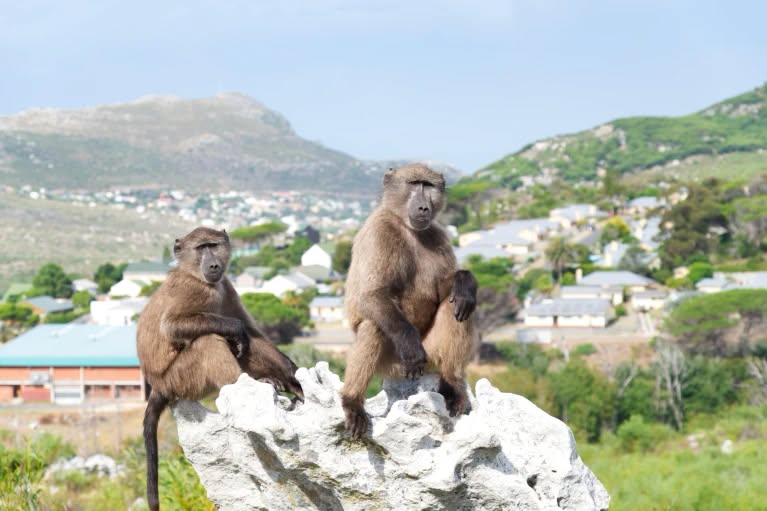
Forty-four baboons from Simon’s Town’s Waterfall troop have been released into an enclosure at the Cape Town Urban Wildlife Centre in Kogelfontein following persistent conflict between people and baboons.
The Cape Peninsula Baboon Management Joint Task Team, which includes representatives from SANParks, CapeNature and the City of Cape Town, said 27 baboons were captured and transported on Friday, 13 November, and another 18 on Saturday. The permits were issued on Thursday, 12 November.
All 45 arrived safely and were screened by three wildlife veterinarians. One older female was euthanised after the screening found she had a growth on her chest, fluid in her bowels and no teeth.
ALSO READ: High Court questions legality of detaining prospective asylum seekers
The task team said no males were vasectomised and females received contraceptive implants. Observers from the Cape of Good Hope SPCA were present at the capture site at the naval base in Simon’s Town and at the centre.
“The relocation of the Waterfall troop is one of the largest relocations of baboons ever undertaken on the South Peninsula.”
The task team said the baboons were settling into the enclosure and were being monitored around the clock. Staff were tracking feeding, social interactions and the behaviour of individual animals and the troop, with ongoing veterinary oversight.
One female still had to be captured and relocated when the task team issued its statement.
“The team is giving her time to settle down and will proceed with the capture as soon as possible. She is being monitored by the baboon rangers and is not left on her own.”
The task team cited persistent conflict in urban Simon’s Town, limited natural low-lying habitat, increasing risks to the baboons’ welfare and public safety concerns as reasons for the relocation.
“The operation was implemented in terms of the approved Cape Peninsula Baboon Management Action Plan,” the task team said.
“The intention to relocate these baboons has been clearly communicated to all affected communities in the Far South for over a year, has been implemented as a very last resort after other interventions were evaluated and deemed ineffective, and as an alternative to culling.”
The task team said placing wildlife in captivity was undesirable and called for proactive management of the peninsula’s chacma baboon population to prevent further conflict in urban areas.
The centre, on city-owned land adjacent to Table Mountain National Park, has two purpose-built enclosures with baboon-proof fencing, shelters, sleeping platforms, climbing structures and water points.
ALSO READ: EXCLUSIVE: Samwu warns ANC to fix alliance or risk its collapse
The Waterfall troop occupies a 2.31-hectare enclosure, which the task team said is about 5.5 times the minimum size specified by the Global Federation of Animal Sanctuaries’ standards for Old World primates.
The baboons have access to drinking water and a pond. Staff supplement their natural diet with browse and scatter food around the enclosure to encourage foraging. The centre is closed to the public.
The task team said the centre would provide lifelong care and could incorporate environmental education and conservation work in future.
“The baboons will not be allowed to reproduce. Apart from the Waterfall and Seaforth troops, no additional baboons will be introduced to the centre.”
SANParks, CapeNature and the City of Cape Town approved the action plan that implements the Cape Peninsula Baboon Strategic Management Plan in November 2025. The task team said it expected the relocation of the Waterfall and Seaforth troops to significantly reduce conflict and improve the baboons’ welfare and residents’ safety.
“It must be noted that there are still over 530 free ranging baboons across the Cape Peninsula and that these troops fulfil a vital ecological role in the ecosystem,” the task team said.






