

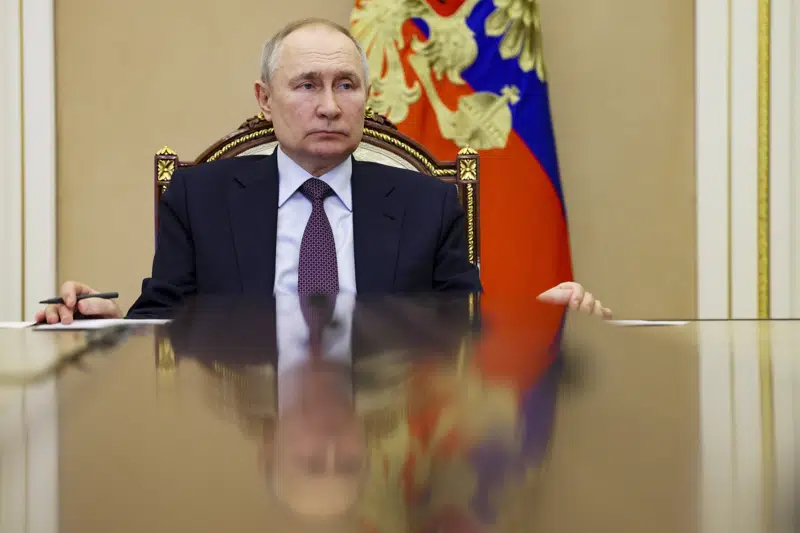


AN international arrest warrant for President Vladimir Putin raises the prospect of the man whose country invaded Ukraine facing justice, but it complicates efforts to end that war in peace talks.
Both justice and peace appear to be only remote possibilities today, and the conflicting relationship between the two is a quandary at the heart of a March 17 decision by the International Criminal Court to seek the Russian leader’s arrest.
Judges in The Hague found “reasonable grounds to believe” that Putin and his commissioner for children’s rights were responsible for war crimes, specifically the unlawful deportation and unlawful transfer of children from occupied areas of Ukraine to Russia.
As unlikely as Putin sitting in a Hague courtroom seems now, other leaders have faced justice in international courts.
Former Serbian strongman Slobodan Milosevic, a driving force behind the Balkan wars of the 1990s, went on trial for war crimes, including genocide, at a United Nations tribunal
You’ve reached your free article limit
Subscribe to enjoy unlimited access to trusted journalism. Cancel anytime.
Subscribe nowNeed help? molokom@insidepolitic.co.za






